The honest answer is: it depends almost entirely on what is underneath the gold. Two necklaces that look identical in a shop window can behave completely differently the first time they meet a swimming pool. This guide goes through the common types of jewellery one by one, so you can tell which of your own pieces can stay on and which should come off before you get in.
What water actually does to jewellery
Plain water is rarely the problem. The problem is what is dissolved in it, and what it does to the metal underneath a gold surface.
Sea water is full of salt, and salt speeds up corrosion in reactive metals such as copper and brass. Pool water contains chlorine, which is aggressive towards silver and towards the alloys used in a lot of jewellery. Shower water brings soap and shampoo, which leave a film that dulls stones and settles into settings. Add sunscreen, sweat and perfume, and a summer day is a fairly demanding test for anything you wear.
Solid gold
Gold itself does not rust or tarnish, which is why it has been used for jewellery for thousands of years. But solid gold jewellery is almost never pure gold. 14k gold is about 58 percent gold, and the rest is usually silver, copper and other metals. Over long exposure, chlorine can attack those other metals and weaken solder points, and stones can loosen in their settings. A swim now and then is fine. Wearing a solid gold chain in a chlorinated pool every day for years is where jewellers start to see problems.
Shop the pieces in this guide
Gold plated over brass or copper
This is the type that suffers most. Standard plating is a very thin layer, often under a micron, over a base of brass or copper. Water does not dissolve the gold, but friction, salt and chlorine wear the thin layer faster, and once the base metal is exposed it reacts. That reaction is the dark patches, the dull finish and the green mark on your skin. If a piece is plated brass, take it off before you swim.
Gold vermeil and sterling silver
Vermeil is gold over sterling silver, with a thicker layer than standard plating. Silver is a precious metal, but it tarnishes when it meets sulphur, and chlorine is particularly hard on it. That is why vermeil and silver brands advise taking pieces off before swimming and showering. It is sound advice. We explain the differences between plated, vermeil and gold filled in more detail in this guide.
Stainless steel with gold bonded by PVD
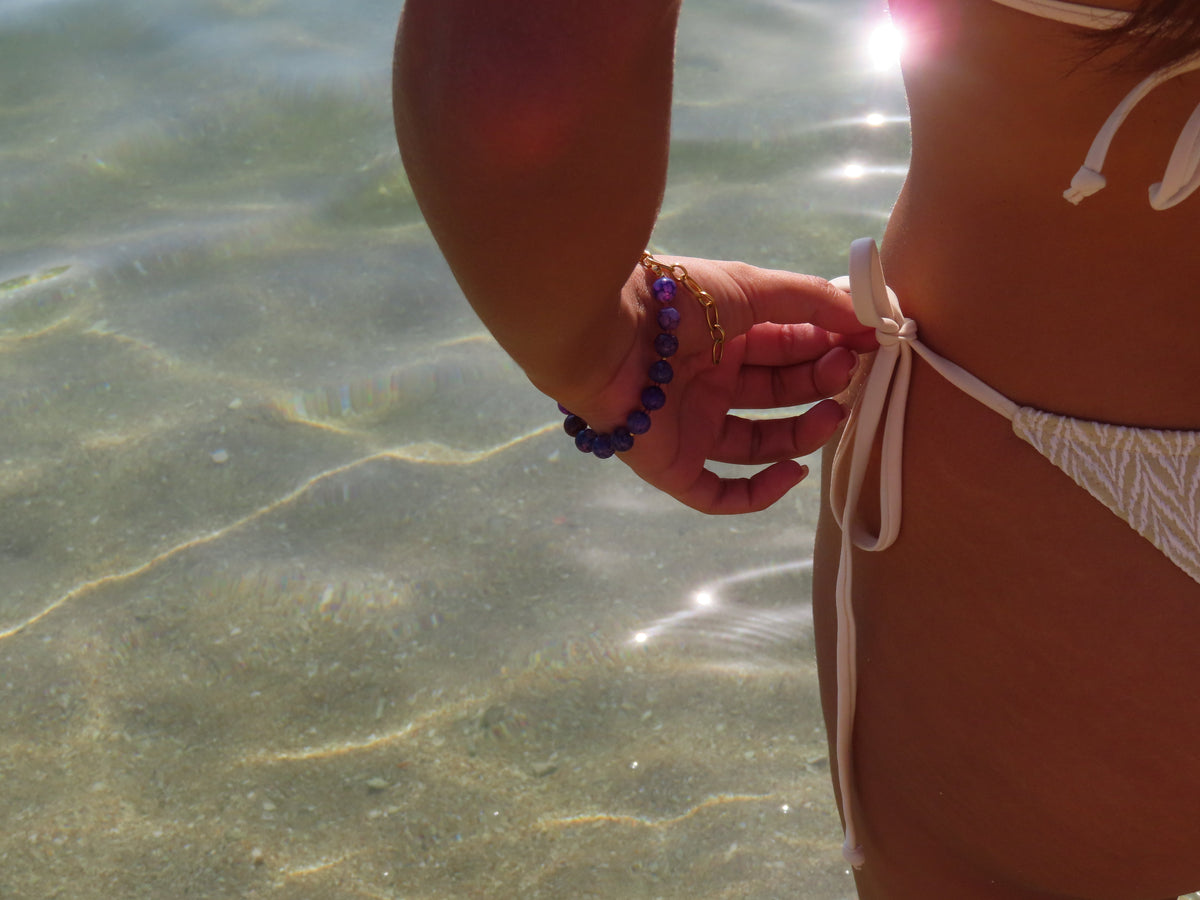
This is what we make, so we will be clear about why. Stainless steel does not contain the copper or brass that reacts with salt and sweat, so there is nothing underneath the gold waiting to discolour. The 18k gold is bonded to the steel by PVD, a vacuum process that produces a harder surface than ordinary electroplating at the same thickness. The result is jewellery built to be worn in the sea, the pool and the shower without coming off. That is the whole idea behind our waterproof jewelry.
What about the stones and pearls?
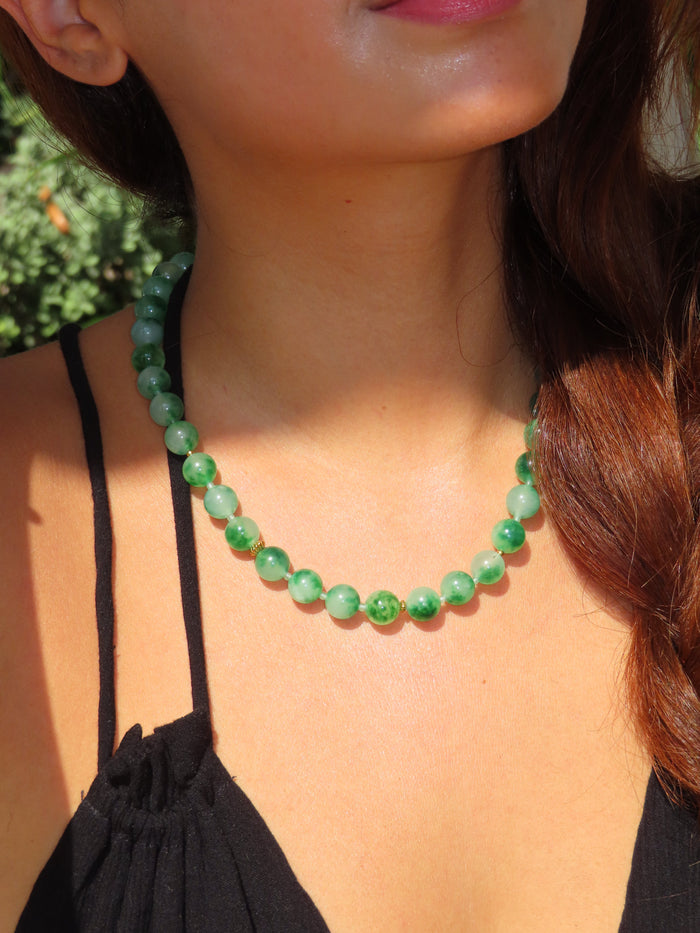
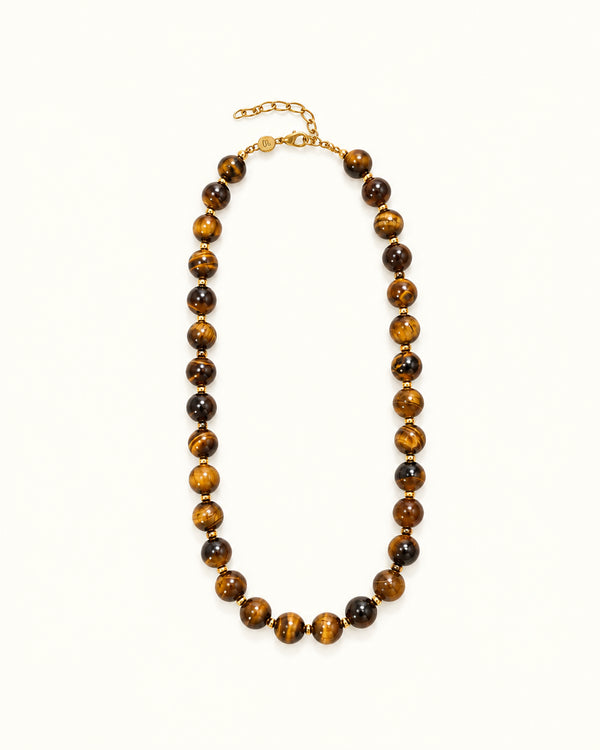
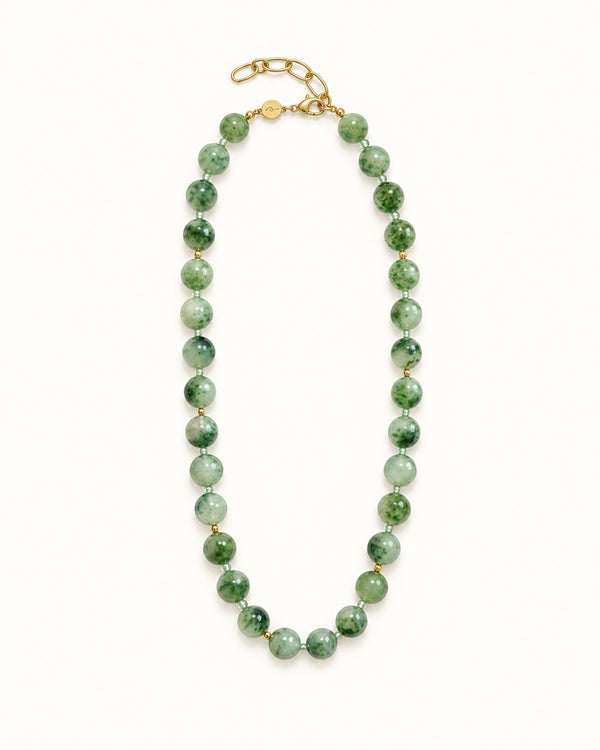
Agate, jade, tiger eye and aventurine are not bothered by water. A quick rinse in fresh water after the sea is all they need to keep soap and salt from building up on the surface.
Pearls are different, and it would be dishonest to pretend otherwise. A pearl is organic, built from layers of nacre, and its lustre can slowly dull with repeated exposure to chlorine, perfume and sunscreen. The metal on our pearl pieces does not mind the water, but the pearls will look their best for longest if you rinse them in fresh water after the pool and pat them dry.
A simple routine that works for almost everything
After salt water or a chlorinated pool, rinse your jewellery in fresh water. Pat it dry with a soft cloth rather than leaving it damp. Every few weeks, wash it in lukewarm water with a drop of mild soap to remove sunscreen and lotion residue. That is it.
The short version
- Solid gold: fine for the occasional swim, less so for daily chlorine.
- Plated brass, vermeil and sterling silver: take them off.
- Stainless steel with PVD gold: leave it on.
- Pearls: enjoy them in the water, then rinse in fresh water.